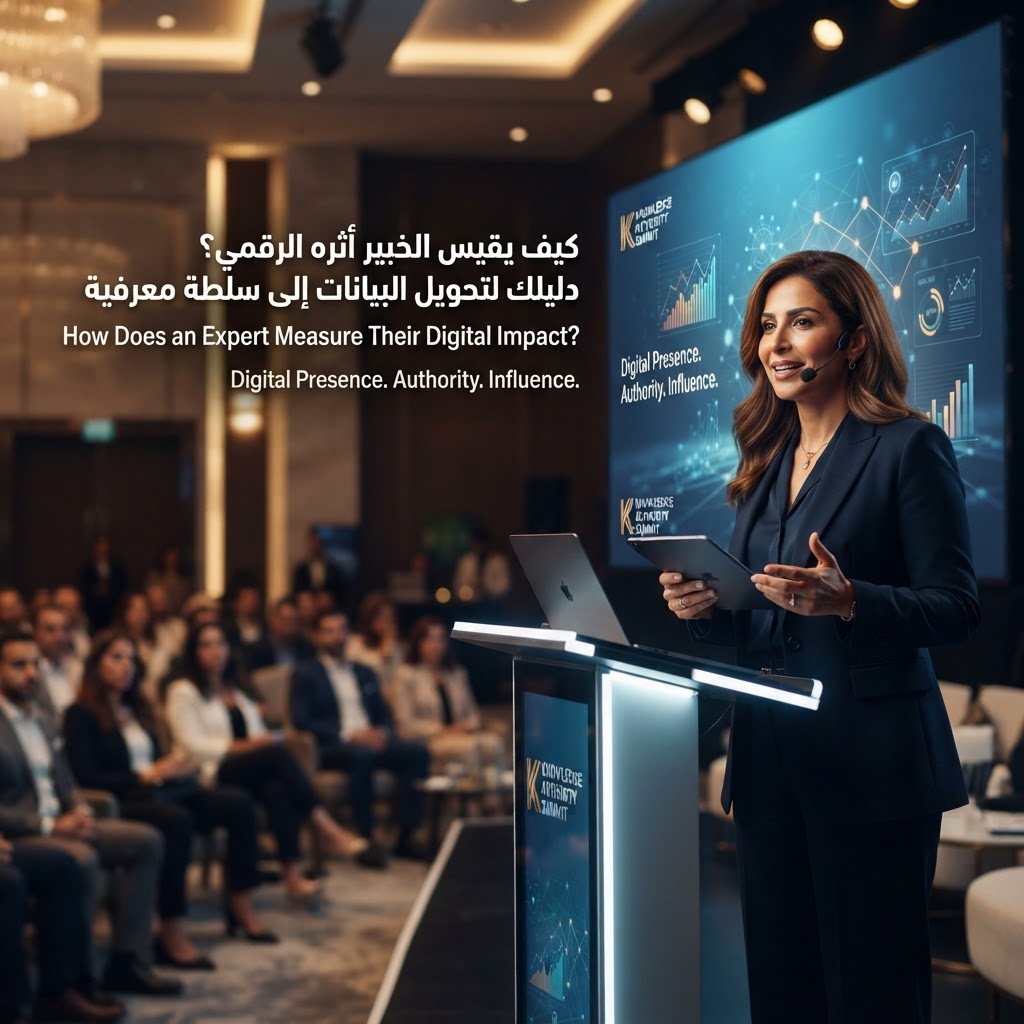
Likes don't equal credibility. Here's how experts in the Gulf can build a trusted digital presence that actually works.
The Problem With Playing the Influencer Game
If you're a consultant, academic, or subject-matter expert, you've probably felt the pressure to "post more," chase followers, and perform for an algorithm. But here's the uncomfortable truth: digital authority and social media popularity are not the same thing.
A lawyer in Riyadh with 800 highly targeted LinkedIn connections can generate more qualified leads than a "thought leader" with 80,000 TikTok followers. A professor at AUB sharing a detailed analysis on her institutional blog can shape policy conversations in ways no viral reel ever will.
The question isn't how much noise you're making online. The question is: who is listening, and what are they doing because of it?
This is exactly where measurement — specifically understanding what happens after someone encounters your digital presence — becomes your most powerful strategic tool.
1. Understand the Difference: Personal Brand vs. Knowledge Authority
A personal brand is about perception. A knowledge authority is about trust built through demonstrated expertise.
- A personal brand asks: How do I look?
- A knowledge authority asks: What do I know, and how does it help others make better decisions?
For experts in the Gulf region — whether you're a financial consultant in Dubai, a healthcare specialist in Riyadh, or a legal academic in Cairo — your audience is not looking for entertainment. They are looking for reliable guidance they can act on.
Practical example: Dr. Khaled Al-Mutairi, a cybersecurity expert based in Kuwait, doesn't post motivational quotes. Instead, he publishes concise Arabic-language breakdowns of new data protection regulations across GCC countries. His newsletter has a 40%+ open rate because his audience knows every edition will save them time and reduce risk.
2. Map Your Digital Presence Intentionally
Before measuring anything, you need to know where your digital presence actually lives and what role each channel plays.
Build a simple authority ecosystem:
- Your owned hub (website, blog, or institutional profile): This is where your full thinking lives. It's permanent, searchable, and yours.
- Distribution channels (LinkedIn, X/Twitter, podcast appearances): These amplify your ideas and drive traffic back to your hub.
- Third-party validation (media mentions, guest articles, speaking engagements): These build external credibility signals.
For Arab-market experts, LinkedIn remains the strongest platform for B2B authority — particularly in the UAE and Saudi Arabia where professional networking has moved significantly online post-2020. Arabic-language content on LinkedIn is still dramatically underserved, which means publishing thoughtful Arabic content gives you an outsized advantage today.
3. Measure What Actually Matters for Experts
Here's where analytics become your strategic compass — not to chase numbers, but to understand whether your expertise is reaching the right people and prompting real action.
The metrics that matter for knowledge authority:
- Referral traffic to your website or articles: Are people clicking from your LinkedIn posts or bio to read your full work?
- Time on page / scroll depth: When someone visits your article, do they read it fully? This tells you if your content is genuinely valuable.
- Return visitors: Are people coming back? Authority is built on repeat engagement, not one-time viral spikes.
- Conversion actions: Are visitors signing up for your newsletter, downloading your report, or booking a consultation?
- Source attribution: Which channel is actually sending you qualified traffic — the one with the most followers, or the one with the most relevant audience?
Tools like Google Analytics 4 (GA4) allow you to track the full journey: from a LinkedIn post → to your website → to a contact form submission. This is intelligence that your native social analytics simply cannot give you.
Practical example: A management consultant in Abu Dhabi discovers through GA4 that her Twitter/X profile drives 3x more consultation inquiries than her Instagram — despite Instagram having twice the followers. She redirects her content energy accordingly.
4. Create Content That Demonstrates Depth, Not Just Presence
Authority content has specific characteristics that distinguish it from influence content:
- It takes a clear, defensible position on a professional question
- It references real data, case studies, or frameworks
- It acknowledges complexity and nuance rather than oversimplifying
- It is useful to a specific professional audience, not broadly appealing to everyone
For the Gulf market specifically: there is a strong appetite for Arabic-language professional content that addresses regional regulatory, cultural, and economic contexts. A financial advisor writing about how Vision 2030 affects SME financing options will always outperform generic global content for a Saudi professional audience.
5. Build Credibility Through Consistency, Not Volume
One of the biggest mistakes experts make is trying to post daily. Authority is not built through frequency — it is built through reliability and depth over time.
Consider this framework:
- One substantial piece per month (a long-form article, a detailed case study, a research summary)
- Two to three shorter distribution pieces per week (LinkedIn posts, threads, short commentary)
- One external validation per quarter (a podcast appearance, a media quote, a speaking slot at an industry event)
This cadence is sustainable for a working professional and signals seriousness — that you're a practitioner with real work to do, not a content machine optimized for engagement.
Conclusion: Start With One Question
Building digital authority as an expert doesn't require you to become someone you're not. It requires you to make your expertise visible, measurable, and accessible to the people who need it most.
Start today by asking yourself one question: If someone Googled my specific area of expertise right now, would they find me — and would what they find reflect the depth of what I actually know?
If the answer is no, that's not a social media problem. That's a digital strategy opportunity.
Your knowledge has value. Make sure the right people can find it, trust it, and act on it.
هل أعجبك المقال؟
احجز استشارتك معي للحصول على خطة تسويق رقمي مخصصة لعملك
احجز استشارة الآن