
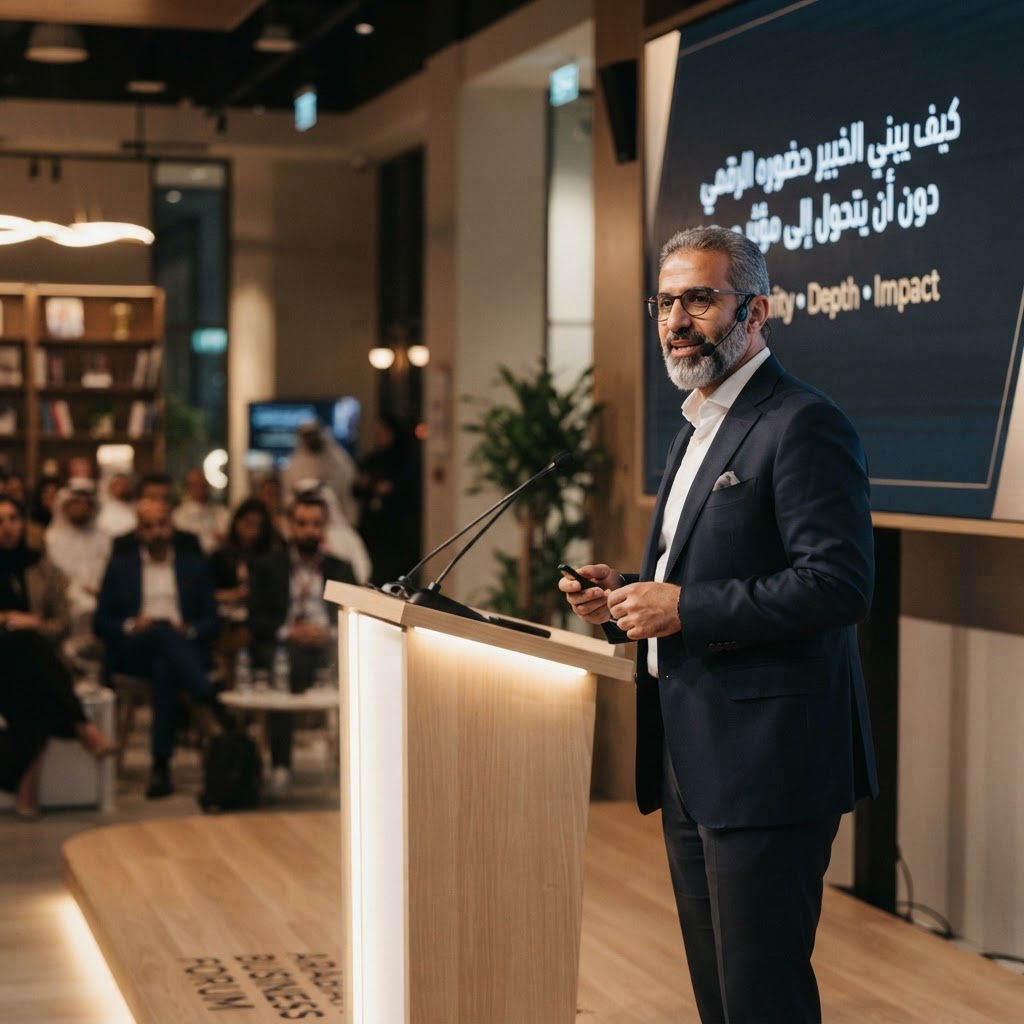
The Expert's Dilemma in the Digital Age
There's a quiet anxiety among many professionals I meet in the Gulf region — doctors, engineers, financial consultants, university professors — who know they have deep expertise but feel uncomfortable with the idea of "building a personal brand." To them, that phrase conjures images of dancing on Reels or posting motivational quotes over sunset photos.
Here's what I tell them: there is a fundamental difference between being an influencer and being a digital authority. One chases attention. The other earns trust. And in 2025, if you are a serious expert who is not visible online, you are effectively invisible to the clients, institutions, and collaborators who are actively searching for someone exactly like you.
This article is for the expert who wants to be found — not famous.
1. Understand What Digital Authority Actually Means
Digital authority is not about follower counts. It is about being the first name that comes to mind — and comes up in search — when someone needs your specific expertise.
A cardiologist in Riyadh who publishes clear, evidence-based Arabic content about heart disease prevention is building digital authority. A financial auditor in Dubai who writes analytical pieces on IFRS changes in the GCC is building digital authority. Neither needs to be an influencer.
The core components of digital authority are:
- Credibility: Your credentials, publications, case studies, and client outcomes
- Visibility: Appearing where your audience searches — Google, LinkedIn, Google Scholar, YouTube
- Consistency: Publishing regularly enough that your name becomes associated with your field
- Accessibility: Making your knowledge digestible without dumbing it down
2. Choose the Right Platforms — Not All of Them
One of the biggest mistakes experts make is trying to be everywhere. This leads to burnout and diluted positioning.
For consultants and business professionals in the Gulf, LinkedIn remains the single most powerful platform for B2B authority. A well-optimized LinkedIn profile with regular thought leadership posts can generate inbound client inquiries without a single paid advertisement.
For academics and researchers, Google Scholar, ResearchGate, and Academia.edu are non-negotiable. An Arabic-language academic who publishes on these platforms and links them to a simple personal website immediately stands out in a region where most academics have zero digital presence.
For technical experts and educators, YouTube Arabic content is severely underserved in most professional niches. A cybersecurity consultant in Cairo or an urban planning specialist in Abu Dhabi who produces even 10 high-quality Arabic explainer videos can dominate their niche within 12 months.
The practical rule: Pick two platforms. Own them completely. Then consider expanding.
3. Build a Knowledge Hub, Not Just Social Profiles
Social platforms are rented land. At any moment, algorithms change, accounts get restricted, or platforms lose relevance. Your digital authority needs a home that you own.
This means a professional website with a content strategy at its core. Not a flashy portfolio, but a structured knowledge hub that answers the real questions your ideal clients and collaborators are asking.
For example:
- A Saudi HR consultant could build a site answering questions about Saudization compliance, labor law updates, and workforce restructuring — topics that GCC companies are actively searching for
- A Jordanian economist could publish quarterly analyses of regional trade patterns, cited by journalists and institutions
- An Emirati architect specializing in sustainable design could document projects with technical detail that attracts both clients and media
SEO is not dead — it is the silent engine of expert discovery. When someone in Kuwait types "Islamic finance consultant" or "clinical psychologist in Amman" into Google, you want your name and your content to surface. That requires intentional, long-term investment in search visibility.