
نصائح عامةمُنشأ بالذكاء الاصطناعي

Meta Tags for SEO: The Gulf Marketer's Complete Guide to Getting Them Right

بهاء الأحمد

بهاء الأحمد

7 دقائق 0
Meta Tags for SEO: The Gulf Marketer's Complete Guide to Getting Them Right

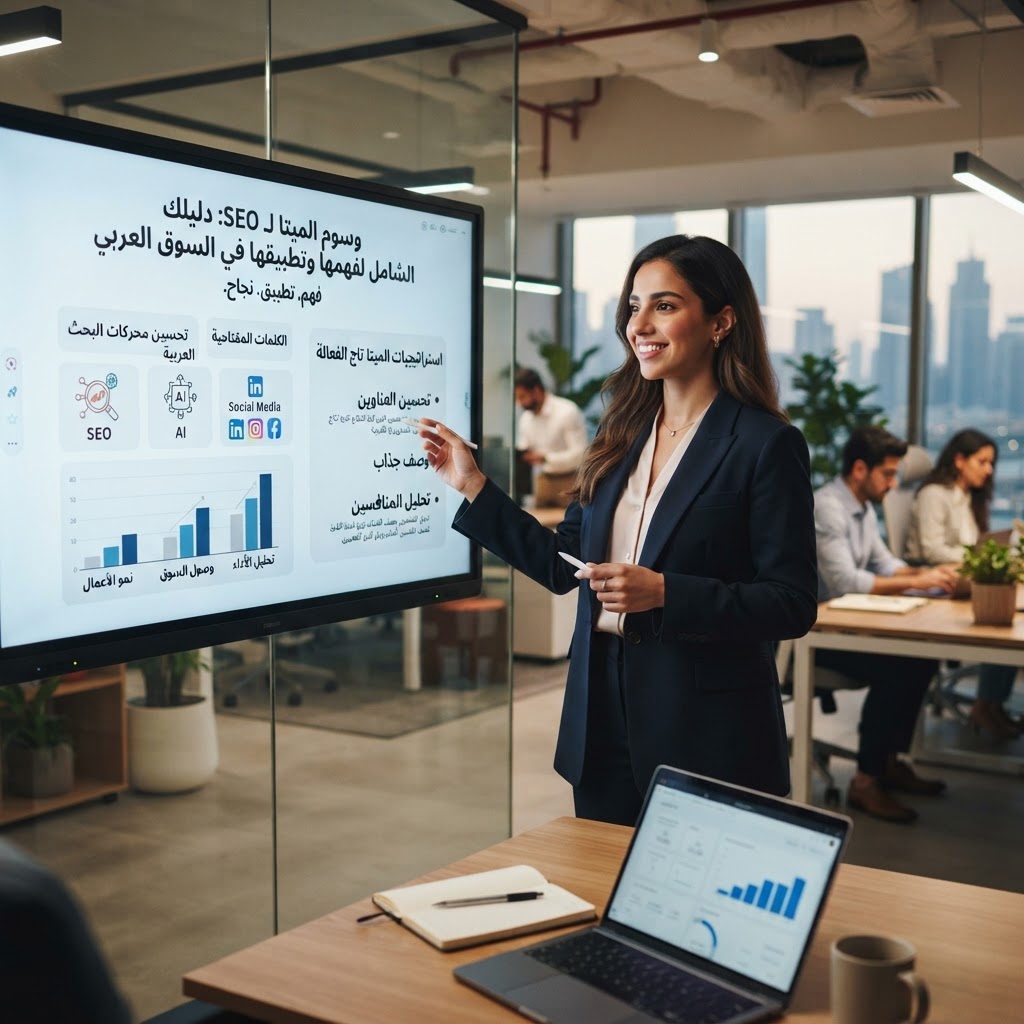
A digital marketer analyzing meta tags and SEO performance on a laptop with Gulf market data on screen

Learn which meta tags actually move the needle for SEO — with practical examples from the Gulf and Arab market.

Stop Guessing with Meta Tags — Here's What Actually Works

After 13 years in digital marketing, one of the most common mistakes I see businesses across the Gulf region make is either ignoring meta tags completely or obsessing over ones that stopped mattering a decade ago. Whether you're running an e-commerce store in Dubai, a real estate platform in Riyadh, or a news portal in Cairo, getting your meta tags right is one of the lowest-effort, highest-impact SEO moves you can make.

Let me cut through the noise and give you a practical, up-to-date breakdown of meta tags — what they are, which ones actually matter, and how to use them strategically in the Arab digital market.


1. What Are Meta Tags, Really?

Meta tags are snippets of HTML code that live in the <head> section of your web page. They don't appear visually on the page itself, but they communicate critical information to search engines like Google, Bing, and increasingly to AI-powered tools like Google's Search Generative Experience (SGE).

Think of them as the behind-the-scenes passport of your webpage — they tell search engines who you are, what you're about, and how you want to be presented.

Here's a basic example:

<title>Buy Luxury Watches in Dubai | WatchWorld UAE</title>
<meta name="description" content="Shop the finest luxury watches in Dubai. Free delivery across the UAE. Rolex, Omega, Patek Philippe and more.">

2. The Meta Tags That Actually Matter for SEO

A. The Title Tag — Your Single Most Important On-Page SEO Element

Despite what some might say, the title tag remains king. It tells both users and search engines what your page is about, and it directly influences click-through rates (CTR) from search results.

Best practices:

  • Keep it between 50–60 characters
  • Place your primary keyword near the beginning
  • Make it compelling and human-readable
  • Include your brand name at the end

Gulf Market Example: Instead of: Home - AlFuttaim Electronics Use: Buy Electronics Online in UAE | Al-Futtaim Electronics

For Arabic-language pages, ensure your title tag is written in proper Arabic and includes the localized keyword: شراء إلكترونيات أونلاين في الإمارات | الفطيم للإلكترونيات


B. The Meta Description — Your Search Ad, For Free

The meta description doesn't directly impact rankings, but it massively impacts whether people click on your result. A higher CTR sends positive signals to Google and can indirectly boost your rankings over time.

Best practices:

  • Target 140–160 characters
  • Include a clear value proposition and a call-to-action
  • Naturally incorporate your target keyword (Google bolds it in results)
  • Write for the human, not the algorithm

Gulf Market Example: A property platform targeting Saudi buyers might write: Looking for villas in Riyadh? Browse 5,000+ listings with verified prices, 3D tours, and direct owner contact. Find your dream home today.

This is far more compelling than a generic: We offer real estate listings in Saudi Arabia.


C. The Robots Meta Tag — Control What Gets Indexed

This tag tells search engine crawlers what they can and cannot do with your page. It's not about rankings — it's about control.

Common directives include:

  • index, follow — Default. Index this page and follow its links.
  • noindex, nofollow — Don't index this page and don't follow its links.
  • noindex, follow — Don't index, but do follow links.

When to use noindex in the Gulf context: If you're running a bilingual site (Arabic + English) and have near-duplicate pages for regional variants (e.g., UAE vs. Kuwait vs. Bahrain editions of the same product page), strategically using noindex on lower-priority variants can help consolidate your SEO authority.


D. The Canonical Tag — Stop Diluting Your SEO Power

The canonical tag (rel="canonical") is arguably one of the most underused yet powerful meta elements, especially for e-commerce sites in the Gulf.

It tells Google: "This is the original version of this content." This prevents duplicate content issues from splitting your ranking power across multiple URLs.

Gulf E-commerce Example: Imagine you run an online abaya store in Qatar. Your product appears under:

  • souqstyle.com/abayas/black-abaya
  • souqstyle.com/abayas/black-abaya?color=black&size=M
  • souqstyle.com/sale/black-abaya

Without a canonical tag, Google sees three competing pages. With it, you consolidate all SEO value to your primary URL.


E. The Open Graph and Twitter Card Tags — For Social Sharing

Strictly speaking, Open Graph (OG) tags are not SEO meta tags — but they are essential for digital marketing in the Gulf, where platforms like Instagram, X (Twitter), Snapchat, and WhatsApp drive enormous traffic.

When someone shares your article on WhatsApp (hugely popular in KSA, UAE, and Egypt), OG tags control how it appears — the thumbnail, title, and description.

Example:

<meta property="og:title" content="Top 10 Ramadan Marketing Campaigns in the UAE 2024">
<meta property="og:description" content="Discover the most creative Ramadan campaigns from UAE brands this year.">
<meta property="og:image" content="https://yoursite.com/images/ramadan-campaigns.jpg">

A well-optimized OG tag can dramatically increase the click rate of shared links — which means more traffic, more engagement, and stronger brand presence.


F. The Viewport Meta Tag — Non-Negotiable for Mobile-First Markets

The Gulf region has some of the highest smartphone penetration rates in the world — over 95% in the UAE and KSA. Google has been mobile-first indexing for years now.

This tag:

<meta name="viewport" content="width=device-width, initial-scale=1.0">

...ensures your site renders correctly on mobile. Without it, your site may appear broken on phones, leading to high bounce rates and lower rankings.


3. Meta Tags That No Longer Matter (Stop Wasting Time)

Let's debunk some myths:

  • Meta Keywords Tag — Google officially stopped using this in 2009. Completely ignore it.
  • Meta Revisit-After — No major search engine honors this. Skip it.
  • Meta Copyright — Purely informational. Zero SEO impact.
  • Meta Author — Generally irrelevant for page rankings (though useful in structured publishing environments).

I regularly audit websites for Gulf businesses and still find developers spending hours perfecting a meta keywords tag. That time is better spent on your title tags and descriptions.


4. Meta Tags for Arabic and Bilingual Websites

If you're managing a dual-language site — which most serious Gulf businesses should — pay close attention to:

  • lang attribute on your <html> tag — Use lang="ar" for Arabic pages and lang="en" for English. This helps search engines serve the right language version to the right audience.
  • hreflang tags — These tell Google which version of your page to show to users based on language and region:
<link rel="alternate" hreflang="ar-SA" href="https://yoursite.com/ar/">
<link rel="alternate" hreflang="en-AE" href="https://yoursite.com/en/">

This is critical for brands operating across Saudi Arabia, UAE, Kuwait, and other GCC countries with both Arabic and expat audiences.


5. A Practical Meta Tag Audit Checklist

Before publishing any page, run through this list:

  • [ ] Title tag is unique, 50–60 characters, includes primary keyword
  • [ ] Meta description is unique, 140–160 characters, includes a CTA
  • [ ] Canonical tag is set, especially for product/category pages
  • [ ] Robots tag is appropriate (index/noindex as needed)
  • [ ] Open Graph tags are complete (title, description, image)
  • [ ] Viewport tag is present
  • [ ] hreflang tags are implemented for multilingual pages
  • [ ] No meta keywords tag wasting space in your code

Conclusion: Small Code, Big Impact

Meta tags are not glamorous. They won't go viral and they won't generate a buzz on LinkedIn. But they are the foundation of every successful SEO strategy — and getting them right is something your competitors in the Gulf market are likely not doing well enough.

My challenge to you: Open your top 5 most important web pages right now. Check the title tags and meta descriptions. Are they unique? Are they compelling? Are they optimized for how your Gulf audience actually searches?

If the answer is no — start there. Fix those five pages this week. Measure your CTR in Google Search Console over the next 30 days. I promise you'll see a difference.

Need help auditing your website's meta tags or building an SEO strategy for the Arab market? Drop your questions in the comments or reach out directly. Let's grow your digital presence together.

#SEO#Meta Tags#Digital Marketing#Gulf Market#Arabic SEO

هل أعجبك المقال؟

احجز استشارتك معي للحصول على خطة تسويق رقمي مخصصة لعملك

احجز استشارة الآن
بهاء الأحمد
بهاء الأحمد

خبير تسويق رقمي بأكثر من 10 سنوات خبرة. أساعدك تبني حضورك الرقمي وتضاعف مبيعاتك.

روابط سريعة

تواصل معي

© 2026 Bhaa Al-Ahmad | بهاء الأحمد. جميع الحقوق محفوظة.

خبير التسويق الرقمي