
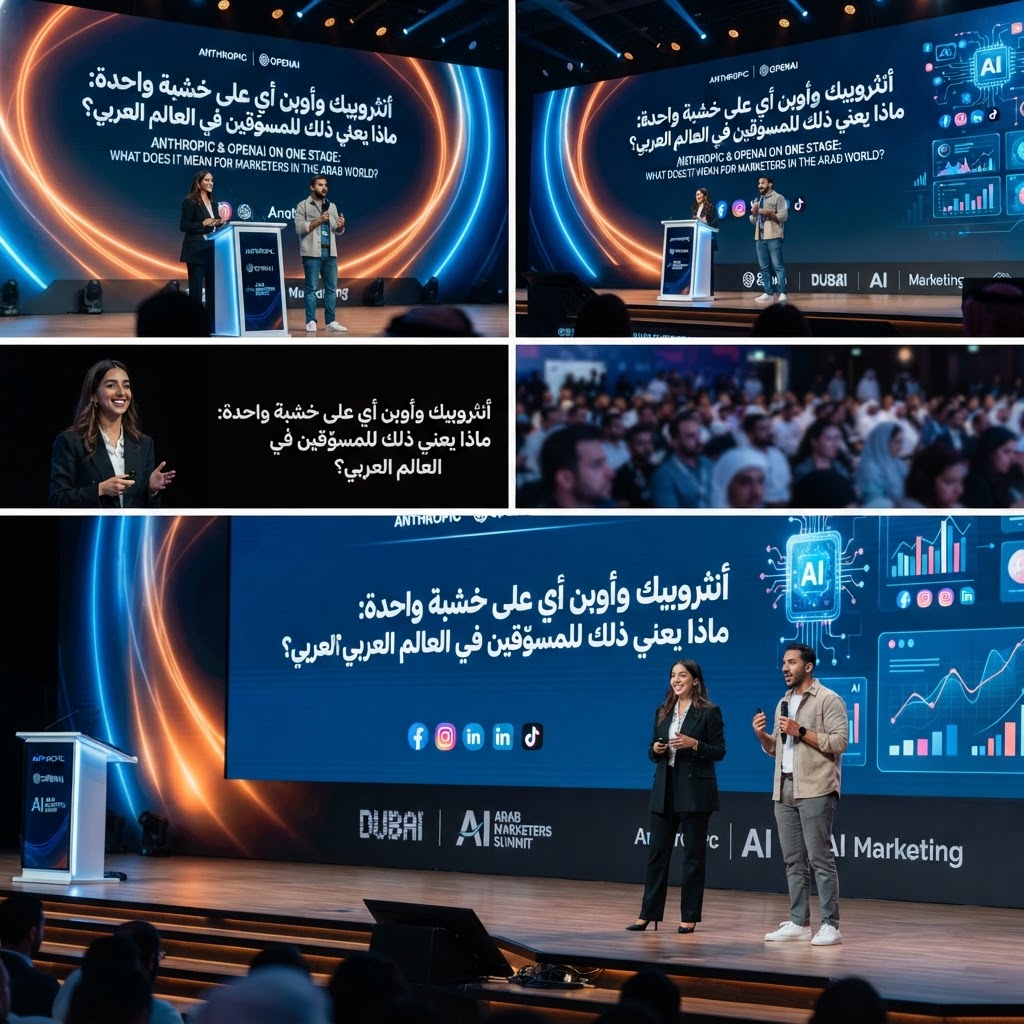
The AI Conversation Is No Longer Optional — Especially in the Gulf
When the world's two most powerful AI companies, Anthropic and OpenAI, confirm their presence on the same stage at TechCrunch Disrupt 2026, it's not just a Silicon Valley headline. It's a signal — a loud one — that the era of AI-driven marketing has fully arrived, and businesses across the Gulf and Arab world can no longer afford to sit on the sidelines.
As someone who has spent over 13 years navigating the ever-shifting landscape of digital marketing, I've learned one thing with absolute certainty: the marketers who pay attention to industry-defining moments like this are the ones who lead, not follow.
Let me break down why this event matters to you, whether you're running a boutique e-commerce brand in Riyadh, managing social media for a hospitality group in Dubai, or launching a startup in Cairo.
1. The AI Stage Is Where the Future Gets Announced First
TechCrunch Disrupt has always been the place where tomorrow's tools are introduced today. The dedicated AI Stage, presented by Google for Startups, is specifically designed to go deep — not just buzzwords, but real frameworks, product roadmaps, and business applications.
When OpenAI and Anthropic both show up, expect discussions around:
- Next-generation language models and how they'll change content creation
- AI agents that can autonomously manage marketing workflows
- Responsible AI — a topic Anthropic is particularly vocal about
- Multimodal capabilities — combining text, image, and video generation
Gulf Insight: Saudi Arabia's Vision 2030 and the UAE's National AI Strategy 2031 are not coincidental. Regional governments are investing billions into AI infrastructure precisely because they know this technology will reshape every industry — including ours.
2. What OpenAI and Anthropic Represent for Arab Marketers
These aren't just tech companies. They're the engine rooms behind tools that millions of marketers already use daily.
OpenAI powers ChatGPT, which has been adopted by marketing teams across the GCC for everything from writing Arabic ad copy to generating SEO content strategies. Anthropic's Claude is increasingly being used by enterprise teams for longer-form content, customer service automation, and brand-safe outputs.
Here's how Gulf businesses are already using these platforms:
- Noon.com and similar e-commerce platforms use AI to generate thousands of product descriptions in both Arabic and English simultaneously
- Real estate developers in Dubai are leveraging AI chatbots (built on GPT-4) to qualify leads and respond to inquiries 24/7 in multiple languages including Arabic, Hindi, and English
- Saudi fintech startups use Claude for compliance-friendly content generation that stays within regulatory messaging boundaries
The announcements coming out of Disrupt 2026 will likely accelerate all of these use cases — dramatically.
3. Key Trends to Watch From the AI Stage (And How to Prepare)
Based on where both companies are heading, here are the trends I expect to dominate the conversation at Disrupt 2026 — and what you should be doing about them right now:
Trend 1: Hyper-Personalized Arabic Content at Scale
AI models are getting significantly better at understanding Gulf Arabic dialects, cultural nuances, and regional sensitivities. What used to require a full localization team can now be produced, reviewed, and optimized in hours.
Action: Start auditing your Arabic content workflows. Where are the bottlenecks? AI can likely cut your production time by 60% or more.
Trend 2: AI-Powered Paid Advertising Optimization
Both Google (sponsor of the AI Stage) and Meta are deeply integrating AI into their advertising platforms. Expect OpenAI partnerships that will make ad creative generation, A/B testing, and audience segmentation almost entirely automated.
Action: If you're running Google Ads or Meta campaigns in the Gulf, start experimenting with AI-generated creatives now. Test them against your human-designed assets and build your benchmarks before this becomes industry standard.