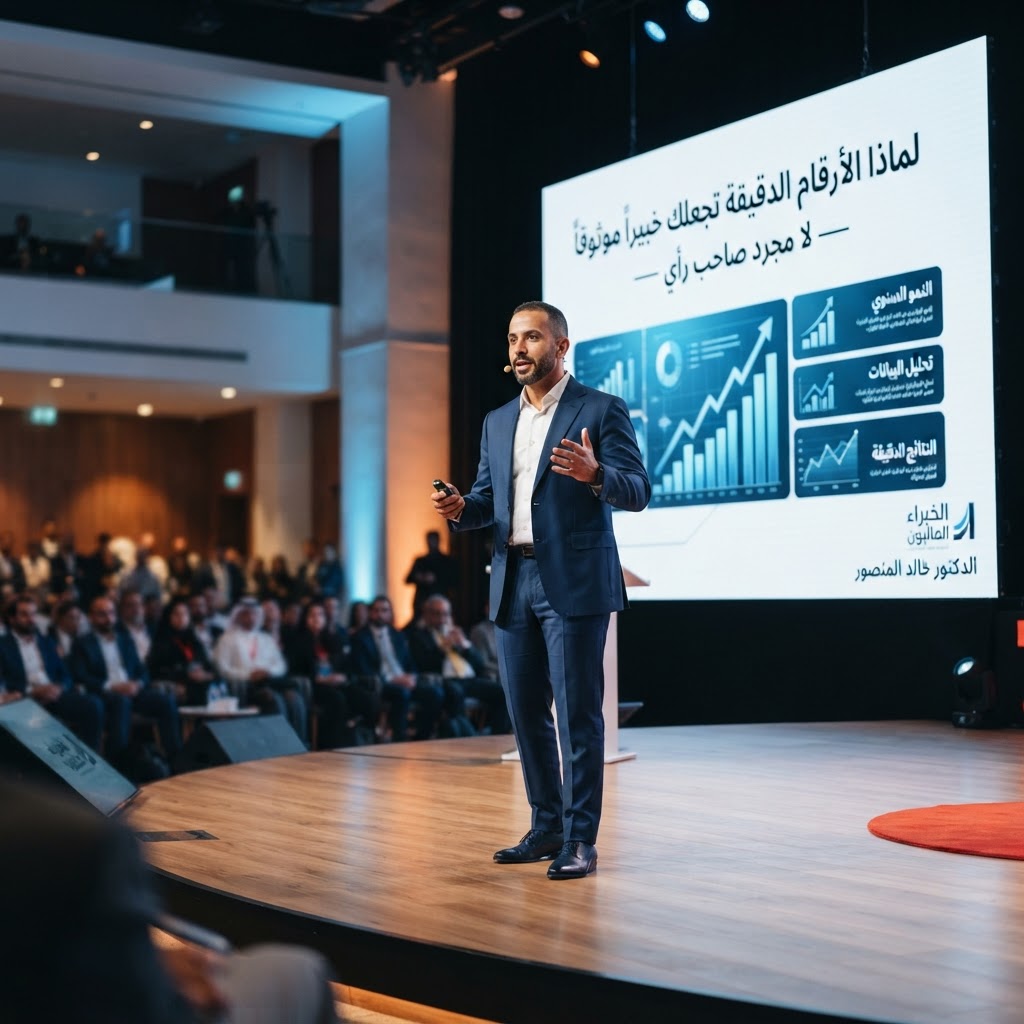
Discover how specific data points can dramatically boost your digital authority as an expert, consultant, or academic.
The Difference Between Sounding Credible and Being Credible
There's a quiet but powerful gap between experts who seem trustworthy online and those who are trusted. In my 13+ years working with consultants, academics, and subject-matter experts across the Gulf region, I've noticed one pattern that separates digital authority from digital noise: specificity.
Anyone can say "I help companies grow." But when a consultant in Riyadh says "I helped a mid-sized logistics firm reduce customer churn by 23.4% over 8 months," something shifts in the reader's mind. Suddenly, this person isn't just another expert — they're someone who measures, tracks, and delivers.
This article is for professionals who want to build genuine digital authority — not a personal brand built on aesthetics, but a knowledge presence built on trust.
1. Understand the Difference: Personal Brand vs. Knowledge Authority
A personal brand is about visibility. It's curated, polished, and often optimized for likes and followers.
A knowledge authority is about credibility. It's built on demonstrated expertise, specific results, and intellectual consistency.
In the Gulf market, there's an important cultural nuance here: audiences — whether in the UAE, Saudi Arabia, Kuwait, or Egypt — tend to trust precision and track records over charisma. A professor at King Abdullah University, a financial consultant in Dubai's DIFC, or a healthcare specialist in Abu Dhabi doesn't need to "go viral." They need to be findable, credible, and specific.
2. The Psychology of Specific Numbers
Here's something most experts overlook: rounded numbers feel made up. Precise numbers feel measured.
Consider these two statements:
- "Our training program improves team productivity."
- "Teams who completed our 6-week program reported a 31.7% improvement in cross-departmental communication scores."
The second version doesn't just sound better — it signals that someone actually tracked the outcome. This is the psychology behind credibility: specificity implies accountability.
This principle matters even more in professional Arab markets, where decision-makers — from procurement officers in Saudi Aramco to HR directors at major UAE conglomerates — are trained to look for evidence, not enthusiasm.
Practical tip: Go back through your LinkedIn posts, your website bio, or your consulting pitch deck. Replace every vague claim with a specific, documented result. Even approximate precision ("roughly 28% improvement across 3 client engagements") is more credible than "significant improvement."
3. How to Build Digital Authority Without Looking Like an Influencer
Many experts resist building a digital presence because they associate it with influencer culture — dancing on Reels, posting daily selfies, or chasing trending topics. That's not what this is about.
Here are four approaches I recommend specifically for experts:
A. Publish Evidence-Based Content
Write about what you've actually seen, measured, and analyzed. A cybersecurity consultant in Bahrain who publishes a quarterly breakdown of regional threat patterns becomes a reference point — not a content creator.
B. Use LinkedIn as a Knowledge Repository
LinkedIn remains the most powerful platform for professional authority in the Arab world. The key is consistency of substance, not frequency of posting. One well-structured post per week, backed by real data or case studies, outperforms daily motivational quotes every time.
C. Speak in Specifics When Sharing Results
If you advised a retail chain in Jordan on inventory optimization, say: "We reduced overstock costs by 18% across 4 branches over two quarters." This isn't showing off — it's documenting expertise.
D. Build a Simple, Professional Digital Home
Your website doesn't need to be flashy. It needs to answer three questions clearly: Who are you? What do you specifically do? What proof exists that you do it well? A clean, evidence-rich page converts skeptical decision-makers far better than a visually impressive but vague one.
4. Real Examples from the Gulf and Arab Market
Example 1 — The Academic Consultant: A professor of urban planning at a Lebanese university started sharing concise LinkedIn articles about housing density challenges in Beirut and Amman. He included actual municipal data, his own field research numbers, and specific policy comparisons. Within eight months, he was invited to consult for two Gulf infrastructure projects — not because he marketed himself, but because he documented his thinking publicly.
Example 2 — The Financial Advisor in Dubai: A certified financial planner shifted her social content from generic "tips" to documented client scenario breakdowns (anonymized, of course). She began saying things like: "A 38-year-old client restructured their portfolio using this framework and reduced their tax exposure by 14.2% in year one." Her inquiry rate increased substantially — and more importantly, the quality of inquiries improved.
Example 3 — The Training Firm in Riyadh: A corporate training company stopped saying "we deliver impactful leadership programs" and started publishing post-training metrics from their clients. Completion rates, pre-and-post competency scores, 90-day behavioral assessments. They didn't gain more followers. They gained more contracts.
5. The Practical Framework: From Vague to Verified
Use this simple audit process for any piece of digital content you produce:
- Identify the claim — What are you asserting?
- Ask: Can I measure this? — If yes, find the number.
- Add context — Over what time period? With how many clients/students/projects?
- Qualify honestly — "In my experience with 12 mid-market clients in the GCC…" is more credible than a sweeping generalization.
- Cite where possible — Link to research, reports, or your own documented case studies.
This process doesn't take long. But it fundamentally transforms how decision-makers perceive your expertise.
Building digital authority as an expert isn't about becoming an influencer. It's about making your knowledge visible, specific, and trustworthy — online, consistently, over time.
The Gulf and Arab markets are full of genuinely brilliant professionals who remain invisible because they haven't learned to document and communicate their expertise with precision. The good news: this is a learnable skill, not a personality trait.
Start today with one small step: find one vague claim on your LinkedIn profile or website, and replace it with a specific, evidence-backed statement. That single change begins the shift from professional to authority.
Your expertise deserves to be seen — precisely.
هل أعجبك المقال؟
احجز استشارتك معي للحصول على خطة تسويق رقمي مخصصة لعملك
احجز استشارة الآن