
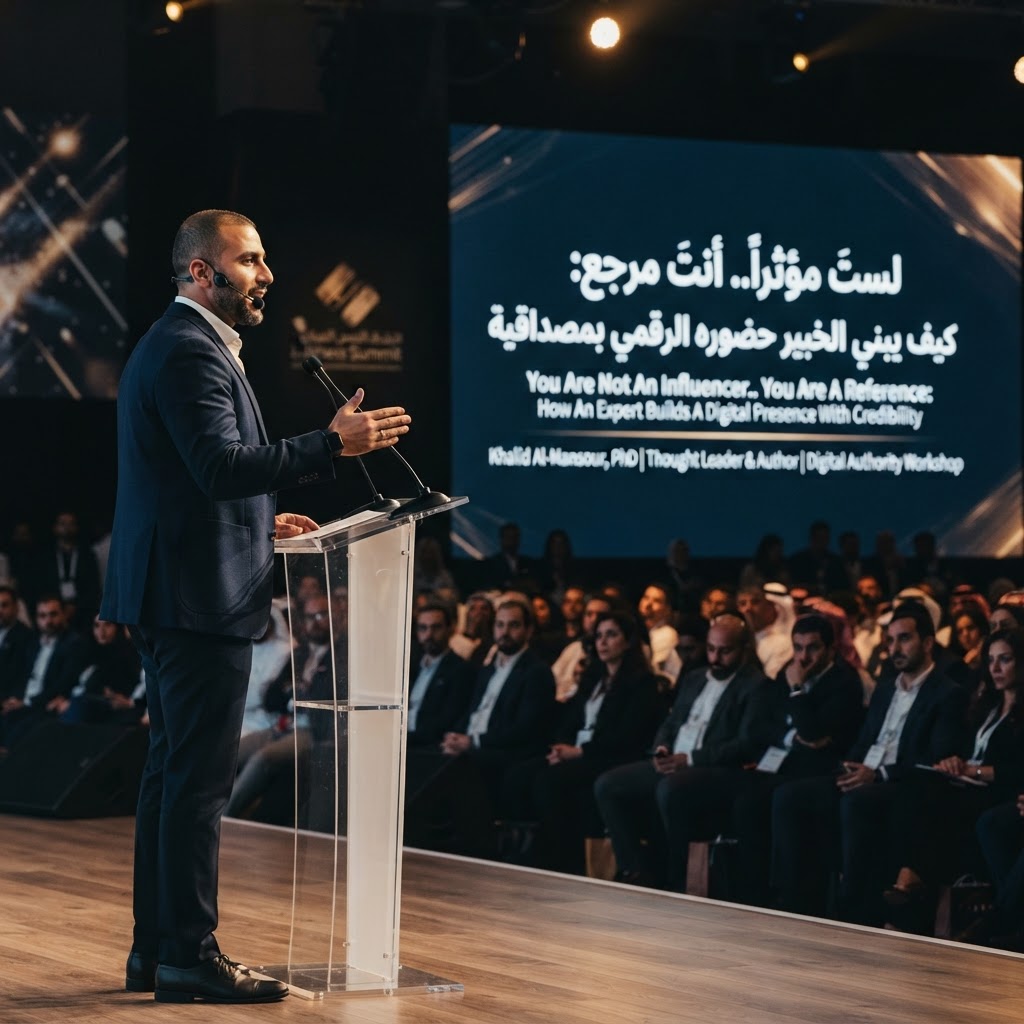
بناء الحضور الرقمي للخبراءمُنشأ بالذكاء الاصطناعي

From Expert to Authority: How Professionals in the Gulf Can Build Unshakeable Digital Credibility

بهاء الأحمد
بهاء الأحمد
7 دقائق 0
From Expert to Authority: How Professionals in the Gulf Can Build Unshakeable Digital Credibility

A professional consultant reviewing content strategy on a laptop, representing expert digital authority building

Stop trying to be an influencer. Here's how real experts build lasting digital authority that commands respect and clients.

The Problem With Experts Online Today

I've worked with dozens of consultants, academics, and subject-matter experts across the Gulf region — brilliant people with decades of knowledge — who almost completely invisible online. Meanwhile, someone with a ring light and a confident smile is charging three times their consulting rate.

This isn't about fairness. It's about positioning. And the good news? Digital authority built on genuine expertise is far more durable than any personal brand built on aesthetics.

LinkedIn's reported move toward creator monetization — including paid subscriptions and exclusive content tools — is a signal that platforms are finally catching up to what I've believed for years: the future belongs to verified experts, not just popular personalities.

But before you can monetize, you need to build. Here's how to do it properly.


1. Understand the Difference: Personal Brand vs. Knowledge Authority

A personal brand is about who you are. A knowledge authority is about what you know and how reliably you teach it.

  • A personal brand asks: "How do I look?"
  • A knowledge authority asks: "What problem do I solve, and for whom?"

Example from the Gulf: Dr. Samer Al-Nabulsi, a Jordanian economist based in Dubai, doesn't post selfies or motivational quotes. He posts structured analyses of GCC fiscal policy. His LinkedIn following is modest — but his consulting pipeline is full. His audience is small and exactly right.

Your goal is not followers. Your goal is recognition among decision-makers in your field.


2. Choose the Right Platform for Your Expertise

Not every expert belongs everywhere. Here's a practical map:

  • LinkedIn → Consultants, corporate trainers, financial advisors, HR professionals
  • X (Twitter/Arabic) → Economists, policy analysts, media commentators
  • YouTube → Academics, technical trainers, legal educators
  • Substack or Newsletter → Researchers, strategists, niche industry experts

Gulf insight: The Arabic-language professional audience on LinkedIn is growing rapidly in Saudi Arabia and the UAE. If you're a bilingual expert, publishing in both Arabic and English doubles your surface area without doubling your work.


3. Structure Your Content Like a Curriculum, Not a Feed

Influencers post reactions. Authorities publish frameworks.

Ask yourself: If someone read my last 10 posts, would they learn something coherent and useful?

Here's a simple content architecture for experts:

  • Pillar content (monthly): A long-form article or analysis — your deepest thinking
  • Supporting content (weekly): Case studies, data breakdowns, lessons from client work
  • Micro content (daily/few times a week): Observations, short takes, questions to your audience

Example: A Saudi HR consultant I work with built her entire digital reputation by publishing one detailed post every week about Saudi labor law updates. No videos. No stories. Just rigorous, useful, consistent analysis. Within 18 months, she was invited to speak at three HR conferences and was quoted in a national newspaper.


4. Let Your Methodology Be Your Signature

The most powerful thing an expert can do online is name and explain their way of thinking.

Don't just share conclusions — share the framework you used to reach them. This is what separates authorities from commentators.

  • A management consultant shouldn't just say "agile transformations fail." Explain your 4-stage diagnostic model for why they fail.
  • A financial advisor shouldn't just warn about inflation. Show your framework for inflation-proofing a portfolio in the GCC context.

When you own a methodology, people don't just read your content — they seek you out specifically.


5. Build Social Proof Without Sounding Salesy

Experts often resist self-promotion because it feels undignified. Here's the workaround: let your work speak, and let others speak for you.

  • Share project outcomes (anonymized if needed)
  • Repost testimonials framed as lessons learned
  • Write about client challenges as case studies
  • Publish speaking engagements, not as bragging, but as invitations: "I'll be discussing X at Y — here's the key argument I'll be making"

Gulf-specific tip: In the Arab professional culture, credibility is heavily tied to institutional association. Mention your academic affiliations, your certifications, the organizations you've advised. These signals matter deeply to your audience.


6. Monetize Through Authority, Not Attention

With platforms like LinkedIn expanding toward paid subscriptions and gated content, experts now have real infrastructure to build revenue directly from their knowledge.

But monetization should come after trust is established. The sequence is:

  1. Consistency → Show up reliably in your niche
  2. Credibility → Back every claim with evidence or experience
  3. Community → Build a small, loyal audience who trusts your judgment
  4. Conversion → Offer services, courses, subscriptions, or consulting

Rushing to monetize before building credibility is the fastest way to look exactly like the influencers you don't want to be mistaken for.


Conclusion: The Gulf Needs More Digital Authorities, Not More Influencers

The Arab world has no shortage of talent, expertise, or knowledge. What it often lacks is experts willing to share that knowledge publicly, consistently, and strategically.

If you're a consultant in Riyadh, an academic in Cairo, a legal expert in Dubai, or a policy analyst in Amman — your knowledge has value beyond your immediate network. And platforms are now building the tools to help you prove it.

Start this week. Pick one platform. Write one post that explains something you know deeply. Don't try to go viral. Try to be useful to the right ten people.

That's how authority is built — one credible, consistent contribution at a time.

#digital authority#LinkedIn#expert positioning#Gulf professionals#content strategy#personal branding#thought leadership
بهاء الأحمد
بهاء الأحمدخبير التسويق الرقمي

خبير تسويق رقمي بأكثر من 13 سنة خبرة في بناء الحضور الرقمي وصناعة المحتوى. عملاء من أكثر من 15 دولة عربية وعالمية.

تسويق رقميسوشيال ميدياإعلانات مدفوعةصناعة محتوى
المزيد عن بهاء الأحمد

هل أعجبك المقال؟

احجز استشارتك معي للحصول على خطة تسويق رقمي مخصصة لعملك

احجز استشارة الآن
بهاء الأحمد
بهاء الأحمد

خبير تسويق رقمي بأكثر من 13 سنة خبرة. أساعدك تبني حضورك الرقمي وتضاعف مبيعاتك.

روابط سريعة

تواصل معي

© 2026 Bhaa Al-Ahmad | بهاء الأحمد. جميع الحقوق محفوظة.

خبير التسويق الرقمي